Ακαδημαϊκό έτος - εξάμηνα σπουδών, διδασκαλία μαθημάτων
Οι προπτυχιακές σπουδές στο Τμήμα Μαθηματικών διαρκούν τέσσερα (4) έτη ή, ισοδύναμα, οκτώ (8) εξάμηνα. Το ακαδημαϊκό έτος αρχίζει την 1η Σεπτεμβρίου κάθε ημερολογιακού έτους και λήγει την 31η Αυγούστου του επομένου. Το εκπαιδευτικό έργο κάθε ακαδημαϊκού έτους αναπτύσσεται σε δύο διδακτικά εξάμηνα, το χειμερινό και το εαρινό. Κάθε εξάμηνο περιλαμβάνει 13 εβδομάδες για διδασκαλία και 3 εβδομάδες για εξετάσεις.
Το αναλυτικό ημερολόγιο για το τρέχον ακαδημαϊκό έτος, με τις ημερομηνίες έναρξης και τέλους των εξαμήνων καθώς και τις ημέρες των αργιών θα το βρείτε εδώ.
Η διδασκαλία των μαθημάτων, οι φροντιστηριακές ασκήσεις και η εργαστηριακή εκπαίδευση γίνεται κατά τις εργάσιμες ημέρες, από Δευτέρα έως Παρασκευή, σύμφωνα με το ωρολόγιο πρόγραμμα μαθημάτων που ανακοινώνεται από τη Γραμματεία. Η παρουσία των φοιτητών στις παραδόσεις των μαθημάτων και λοιπές εκπαιδευτικές δραστηριότητες αν και δεν είναι υποχρεωτική συνιστάται θερμά. Η διδακτική ώρα ορίζεται ως τα 45 πρώτα λεπτά κάθε ώρας μαθημάτων. Η ώρα έναρξης των μαθημάτων είναι ένα τέταρτο μετά την ώρα που αναφέρεται στο πρόγραμμα. π.χ. αν ένα μάθημα εμφανίζεται στι πρόγραμμα 09:00-10:00, η πραγματική διδασκαλία είναι 09:15-10:00.
Βρείτε εδώ το ωρολόγιo πρόγραμμα μαθημάτων του ακαδημαϊκού εξαμήνου που σας ενδιαφέρει.
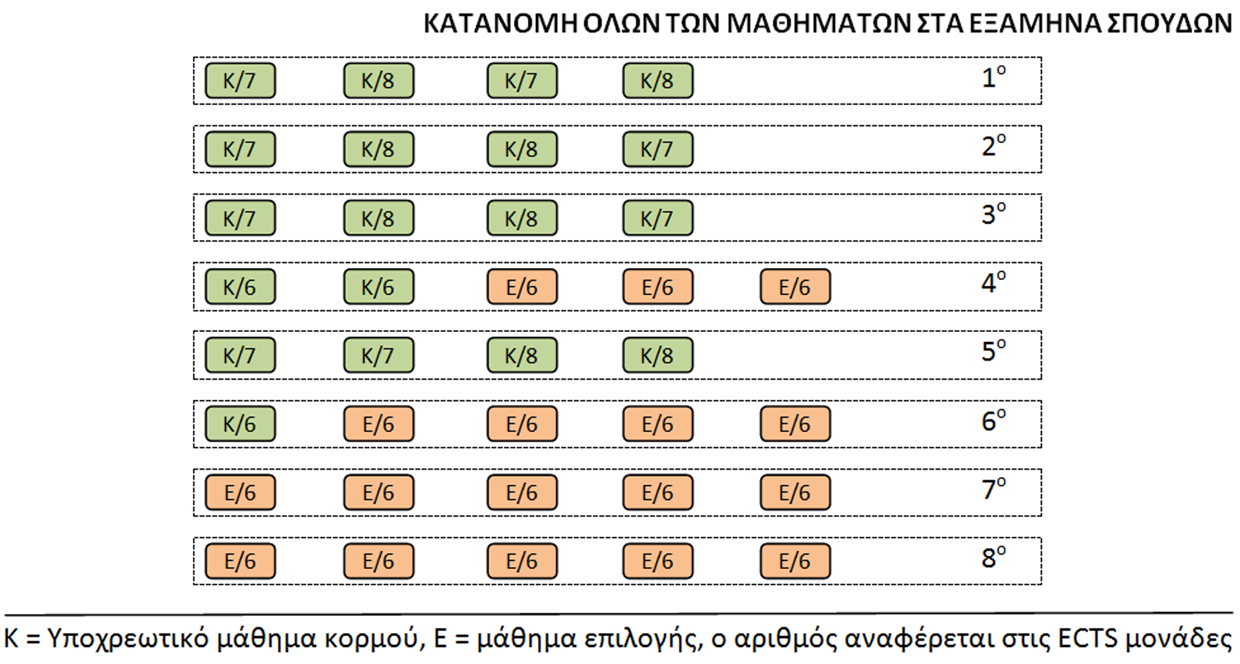
Κατανομή Μαθημάτων στα εξάμηνα σπουδών
Το Πρόγραμμα Προπτυχιακών Σπουδών προβλέπει τη διδασκαλία τεσσάρων (4) έως πέντε (5) μαθημάτων ανά εξάμηνο τα οποία αντιστοιχούν σε είκοσι (20) έως είκοσι έξι (26) διδακτικές ώρες εβδομαδιαίως, στις οποίες συμπεριλαμβάνονται και ώρες φροντιστηρίων ή/και εργαστηρίων. Κάθε εξάμηνο έχει τριάντα (30) από τις διακόσιες σαράντα (240) ECTS μονάδες που απαιτούνται συνολικά για να καταστεί ο φοιτητής Πτυχιούχος Μαθηματικών. Παρά το γεγονός ότι η αλληλουχία μαθημάτων στο εγκεκριμένο πρόγραμμα σπουδών είναι ενδεικτική, και ένας φοιτητής είναι ελεύθερος να το αναμορφώσει όπως αυτός επιθυμεί, το τμήμα θεωρεί ότι δεν είναι συνετό να υπάρχουν σημαντικές αλλαγές από το προτεινόμενο ενδεικτικό πρόγραμμα σπουδών. Η διδακτέα ύλη που καλύπτεται από τα μαθήματα προχωρημένων εξαμήνων αλλά και ο τρόπος διδασκαλίας τους, γίνεται με την υπόθεση ότι ο φοιτητής έχει κατανοήσει το περιεχόμενο των μαθημάτων των προηγούμενων εξαμήνων.
Ανανέωση Εγγραφής
Κατά την έναρξη κάθε ακαδημαϊκού εξαμήνου, και στην αποκλειστική προθεσμία που ανακοινώνεται από τη Γραμματεία, όλοι οι προπτυχιακοί φοιτητές, ανεξαρτήτως έτους σπουδών, οφείλουν να ανανεώνουν την εγγραφή τους (στο εξάμηνο που διανύουν χρονικά από την αρχική τους εγγραφή στο τμήμα). Οι φοιτητές εγγράφονται ηλεκτρονικά μέσω των ηλεκτρονικών υπηρεσιών του τμήματος (e-Γραμματεία).
Φοιτητές οι οποίοι δεν προχωρούν σε Δήλωση Ανανέωσης Εγγραφής σε κάποιο εξάμηνο, δεν μπορούν να παραλάβουν Πιστοποιητικό Φοίτησης ούτε να καταθέσουν τη Δήλωση Μαθημάτων για το συγκεκριμένο εξάμηνο.
Επιλογή Κατεύθυνσης Σπουδών
ΠΡΙΝ τη δήλωση μαθημάτων του 4ου εξαμήνου, οι φοιτητές οφείλουν να επιλέξουν την κατεύθυνση που θα ακολουθήσουν στη συνέχεια των σπουδών τους. Η επιλογή αυτή είναι ενδεικτική και όχι δεσμευτική. Αν στην πορεία του χρόνου ο φοιτητής για οποιονδήποτε λόγο αλλάξει άποψη, έχει το δικαίωμα, στο τελευταίο εξάμηνο των σπουδών του, να ζητήσει με αίτηση προς τη συνέλευση του τμήματος αλλαγή της αρχικής του δήλωσης και να επιλέξει άλλη κατεύθυνση σπουδών (με την οποία και θα ολοκληρώσει τις σπουδές του).
Προσοχή: μετά την (αρχική) επιλογή κατεύθυνσης, η Ηλεκτρονική Γραμματεία βελτιστοποιεί, ξεχωριστά για τον κάθε φοιτητή, και για όλη τη συνέχεια των σπουδών του, τις επιλογές μαθημάτων, με αποκλειστικό κριτήριο ακριβώς αυτή την πληροφορία. Συνεπώς, σε περίπτωση μελλοντικής υπαναχώρησης ως προς την κατεύθυνση, ο φοιτητής, αναλαμβάνει και την υποχρέωση αναπροσαρμογής του προσωπικού του σχεδίου δήλωσης/επιλογής μαθημάτων προκειμένου να ανταποκριθεί στις απαιτήσεις της (νέας) κατεύθυνσης με την οποία ενδιαφέρεται να ολοκληρώσει τις σπουδές του.
Δηλώσεις Μαθημάτων
O φοιτητής, σε κάθε ακαδημαϊκό εξάμηνο, έχει την υποχρέωση να επιλέξει τα μαθήματα της προτίμησής του, υποβάλλοντας σχετική δήλωση. Για όλους τους φοιτητές με έτος εισαγωγής 2000-01 και μετέπειτα, η Δήλωση Μαθημάτων γίνεται μόνον ηλεκτρονικά σε προθεσμίες που ανακοινώνονται από τη Γραμματεία.
Η επιλογή/δήλωση μαθημάτων ισχύει μόνο για το ακαδημαϊκό εξάμηνο που γίνεται, και κατ’ επέκταση για μία-και-μόνο-ακαδημαϊκή χρονιά. Τροποποιήσεις και αποστολή δηλώσεων μπορούν να γίνονται μέσα στο χρονικό όριο για την υποβολή δηλώσεων, που έχει ανακοινωθεί. Ως τελική δήλωση θεωρείται εκείνη που έχει διαμορφωθεί και καταχωρηθεί στο σύστημα μέχρι και την ημερομηνία λήξης της προθεσμίας των δηλώσεων. Αν ένας φοιτητής δεν υποβάλλει Δήλωση Μαθημάτων, τότε δεν μπορεί να πάρει συγγράμματα, ούτε να λάβει μέρος στις εξετάσεις του εξαμήνου και στην επαναληπτική εξεταστική του Σεπτεμβρίου (η δήλωση των μαθημάτων προς εξέταση για την εξεταστική του Σεπτεμβρίου είναι αυτόματη και περιλαμβάνει όσα μαθήματα δεν έχουν προβιβάσιμο βαθμό από τις δηλώσεις χειμερινού και εαρινού εξαμήνου).
Για τα 8 εξάμηνα σπουδών της κανονικής φοίτησης, κάθε δήλωση μαθημάτων πρέπει οπωσδήποτε να περιλαμβάνει μαθήματα συνολικού βάρους τουλάχιστον 30 ECTS μονάδων. O φοιτητής είναι ελεύθερος, σε κάθε εξάμηνο, μέσα στο συνολικό αριθμό των μαθημάτων που θα επιλέξει, να δηλώσει μαθήματα από οποιοδήποτε εξάμηνο, αρκεί να διδάσκονται στην αντίστοιχη περίοδο (χειμερινή ή εαρινή). Στο συνολικό αριθμό των δηλούμενων μαθημάτων, ο φοιτητής μπορεί να συμπεριλάβει και μαθήματα προηγούμενων εξαμήνων στις εξετάσεις των οποίων έχει αποτύχει (προσοχή: υπάρχουν διαδικαστικοί κανόνες).
Για τα περισσότερα μαθήματα κορμού προβλέπεται ο διαχωρισμός του ακροατηρίου σε μικρότερα τμήματα, με κατά το δυνατό ίσο αριθμό φοιτητών, με τους ίδιους μαθησιακούς στόχους και με ομοιόμορφη ύλη διδασκαλίας για κάθε μάθημα. Όσοι φοιτητές ανήκουν στο ίδιο εξάμηνο με το δηλούμενο μάθημα κορμού, εντάσσονται από τη Γραμματεία στα τμήματα, βάσει του επωνύμου τους. Όσοι φοιτητές ανήκουν σε ανώτερο εξάμηνο σπουδών από εκείνο του δηλούμενου μαθήματος κορμού, καθορίζουν το τμήμα της προτίμησής τους.
Βρείτε παρακάτω (σε μορφή PDF):
- τους κανόνες Δήλωσης Μαθημάτων ανάλογα με το εξάμηνο φοίτησης,
- την κατανομή όλων των μαθημάτων στα εξάμηνα σπουδών,
- τον κατάλογο των Υποχρεωτικών Μαθημάτων (ΚΟΡΜΟΣ) του προγράμματος σπουδών,
- τον κατάλογο των Υποχρεωτικών Μαθημάτων της Κατεύθυνσης ΕΦΑΡΜΟΣΜΕΝΑ ΜΑΘΗΜΑΤΙΚΑ,
- τον κατάλογο των Υποχρεωτικών Μαθημάτων της Κατεύθυνσης ΘΕΩΡΗΤΙΚΑ ΜΑΘΗΜΑΤΙΚΑ,
- τον κατάλογο των Υποχρεωτικών Μαθημάτων της Κατεύθυνσης ΠΛΗΡΟΦΟΡΙΚΗΣ & ΥΠΟΛΟΓΙΣΤΙΚΑ ΜΑΘΗΜΑΤΙΚΑ,
- τον κατάλογο των Υποχρεωτικών Μαθημάτων της Κατεύθυνσης ΣΤΑΤΙΣΤΙΚΗ - ΘΕΩΡΙΑ ΠΙΘΑΝΟΤΗΤΩΝ, ΕΠΙΧΕΙΡΗΣΙΑΚΗ ΕΡΕΥΝΑ,
- τη διαμόρφωση των Μαθημάτων της Κατεύθυνσης ΓΕΝΙΚΗ,
- τον κατάλογο των Μαθημάτων Ελεύθερης Επιλογής για το τρέχον ακαδημαϊκό έτος,
- το ενδεικτικό πρόγραμμα σπουδών.
Το Τμήμα Μαθηματικών προτείνει μια συγκεκριμένη, επιστημονικά ορθή, χρονική ακολουθία δήλωσης των μαθημάτων, η τήρηση της οποίας συμβάλει σημαντικά στην παιδεία, την κατάκτηση δύσκολης γνώσης αλλά και τις βαθμολογικές επιδόσεις των φοιτητών. Βέβαια, η κατανομή των μαθημάτων στα εξάμηνα θεωρείται ενδεικτική και δεν υπάρχει προαπαίτηση επιτυχούς εξέτασης σε κάποιο μάθημα για την παρακολούθηση άλλου: οι φοιτητές έχουν ευελιξία να επιλέξουν άλλη σειρά μαθημάτων από αυτήν που υποδεικνύει το ενδεικτικό πρόγραμμα σπουδών.
Επιλογή Συγγραμμάτων
Στον κάθε φοιτητή χορηγούνται δωρεάν τα διδακτικά συγγράμματα του κάθε μαθήματος μόνον όταν θα το δηλώσει για πρώτη φορά. Ο αριθμός συγγραμμάτων που δικαιούται ο κάθε φοιτητής είναι ίσος με τον αριθμό των μαθημάτων που απαιτείται να επιλέξει για επιτυχή παρακολούθηση για την απόκτηση του πτυχίου, ήτοι 36. Η δήλωση συγγραμμάτων γίνεται ηλεκτρονικά μέσω του Υπουργείου Παιδείας, Διά Βίου Μάθησης και Θρησκευμάτων στον ιστότοπο «Εύδοξος». Ο ιστότοπος περιέχει πληροφορίες για τα συγγράμματα που έχουν επιλεγεί από το Τμήμα Μαθηματικών για όλα τα προσφερόμενα μαθήματα του τρέχοντος ακαδημαϊκού έτους. Εδώ γίνεται και η επιλογή/δήλωση των συγγραμμάτων από τους φοιτητές, μέσα σε συγκεκριμένες προθεσμίες καθοριζόμενες από το ΥΠ.Π.Ε.Θ. (ανακοινώνεται από τη Γραμματεία σε κάθε ακαδημαϊκό εξάμηνο).
Εξεταστική Διαδικασία
Ο ακριβής τρόπος αξιολόγησης κάθε μαθήματος καθορίζεται από τον διδάσκοντά του, και, επί της αρχής, βασίζεται σε γραπτές τελικές εξετάσεις. Οι εξετάσεις διενεργούνται στο τέλος κάθε ακαδημαϊκού εξαμήνου (Ιανουάριο/Φεβρουάριο και Iούνιο). Σε περίπτωση αποτυχίας ή μη συμμετοχής σε αυτές, ο φοιτητής μπορεί να εξεταστεί τον Σεπτέμβριο. Στις εξεταστικές περιόδους στο τέλος του χειμερινού και του εαρινού εξαμήνου, εξετάζονται αποκλειστικά τα μαθήματα που διδάχθηκαν κατά τη διάρκεια των αντίστοιχων εξαμήνων. Στην επαναληπτική εξεταστική περίοδο του Σεπτεμβρίου, εξετάζονται όλα τα μαθήματα, ανεξάρτητα από το εξάμηνο στο οποίο έχουν διδαχθεί. Η βαθμολογία των εξετάσεων ανακοινώνεται εντός 20 ημερών από την ημέρα της εξέτασης και εκφράζεται στην αριθμητική κλίμακα από μηδέν (0) έως δέκα (10), με ακέραιες ή/και μισές μονάδες. Προβιβάσιμος βαθμός για κάθε είδους εξέταση είναι το πέντε (5) και οι μεγαλύτεροί του. Όσοι απέτυχαν στις εξετάσεις μαθημάτων επιλογής, έχουν το δικαίωμα ή να επαναλάβουν το μάθημα ή να το αντικαταστήσουν με άλλο μάθημα επιλογής της προτίμησής τους.
Κανένας φοιτητής δεν έχει δικαίωμα προσέλευσης στην εξέταση μαθήματος το οποίο δεν έχει προηγουμένως δηλώσει στο τρέχον εξάμηνο των σπουδών του, ούτε σε άλλον διδάσκοντα από εκείνον που προβλέπεται για το τμήμα του (στην περίπτωση μαθημάτων με περισσότερα του ενός τμήματος).
Βρείτε εδώ το πρόγραμμα της εξεταστικής περιόδου που σας ενδιαφέρει.
Βελτίωση Βαθμολογίας
Η Σύγκλητος του Πανεπιστημίου Πατρών, σε εφαρμογή διατάξεων της κείμενης νομοθεσίας, έχει εγκρίνει ρύθμιση που προβλέπει τη δυνατότητα της επανεξέτασης φοιτητών σε μαθήματα στα οποία έχουν ήδη εξετασθεί επιτυχώς και επιθυμούν να βελτιώσουν τη βαθμολογία τους. Η ρύθμιση αφορά αποκλειστικά-και-μόνο τα υποχρεωτικά μαθήματα κορμού του τρέχοντος εξαμήνου φοίτησης του φοιτητή και όχι μαθήματα επιλογής ούτε μαθήματα υποχρεωτικά κορμού από προηγούμενα εξάμηνα. Φοιτητές που επιθυμούν βελτίωση του βαθμού τους κατά τα ανωτέρω, υποβάλλουν σχετική αίτηση στη Γραμματεία του Τμήματος, στις ημερομηνίες που ανακοινώνονται, προκειμένου να επανεξεταστούν την περίοδο Σεπτεμβρίου στα μαθήματα που επιθυμούν βελτίωση του βαθμού τους.
Θέματα Δεοντολογίας
Ο προπτυχιακός φοιτητής κατά τη διεξαγωγή μιας εξέτασης μαθήματος ή εργαστηρίου:
- Δεν πρέπει να αντιγράφει, να παρέχει ή να αναζητάει βοήθεια από τους συμφοιτητές του.
- Δεν πρέπει να χρησιμοποιεί οποιαδήποτε άλλα μέσα, εκτός από αυτά που έχουν επιτραπεί και καθοριστεί από το διδάσκοντα. Ειδικότερα, κατά την είσοδό τους στην αίθουσα των εξετάσεων, δεν επιτρέπεται να έχουν μαζί τους κινητά τηλέφωνα, ηλεκτρονικά μέσα μετάδοσης πληροφοριών, κ.λπ.
Ο προπτυχιακός φοιτητής θα πρέπει:
- Να μην ενδίδει σε φαινόμενα λογοκλοπής, δηλαδή χρήση ή άντληση ιδεών από εργασίες άλλων συγγραφέων, χωρίς σαφή αναφορά στο έργο τους.
- Να μην εκπονεί ατομικές εργασίες σε συνεργασία με άλλους συμφοιτητές του.
- Να μην αναθέτει τις εργασίες που έχει αναλάβει, να τις διεκπεραιώσουν άλλα, εκτός του ιδίου, φυσικά ή νομικά πρόσωπα.
Το Τμήμα αντιμετωπίζει με πολύ σοβαρότητα φαινόμενα αντιγραφής, ανεπίτρεπτης συνεργασίας και λογοκλοπής. Σε περίπτωση αντιγραφής ή προσπάθειας αντιγραφής ή συνεργασίας σε αντιγραφή ή σε πλαστογραφία ή πλαστοπροσωπία σε εξετάσεις, μετά από καταγγελία του διδάσκοντος ή του επιτηρητή, το Τμήμα εφαρμόζει τις κυρώσεις που προβλέπονται από τις αποφάσεις του, τον Εσωτερικό Κανονισμό του Πανεπιστημίου και την κείμενη νομοθεσία.